

We're a global leader in premium drinks, one of the most dynamic consumer categories.


Tell us about your career journey so far.
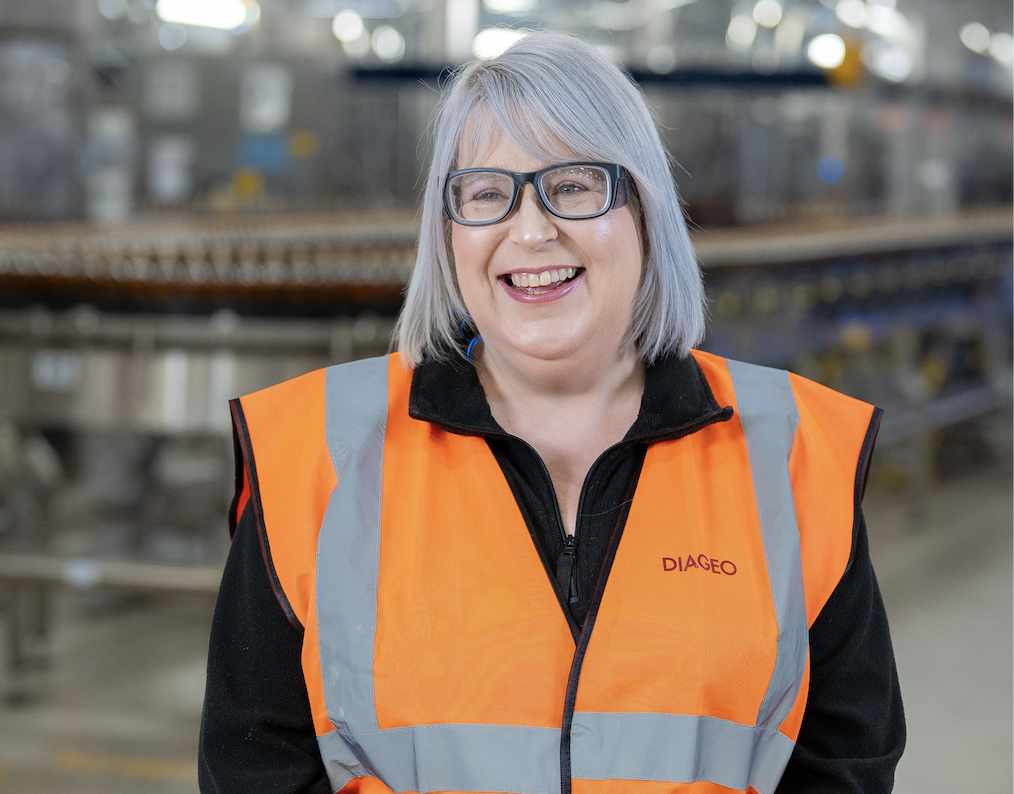
I’ve been with Diageo for 12 years now. Before that, I spent 24 years with a major UK bank, most of that time as a bank manager.
I joined following voluntary redundancy and was looking for a completely new chapter. My first role was as Wellbeing Co‑ordinator within Occupational Health for the UK and Ireland back in 2014. I did that for around a year, but I’d come from a very fast‑paced environment and found myself looking for something more dynamic.
That’s when I moved to Shieldhall as a Manufacturing Excellence Co‑ordinator. On the surface, banking to bottling might sound like a big leap, but so many of the skills were transferable - things like 5S, process improvement and reducing set‑up time. In the bank, it was people and money; here, it’s bottles and whisky. The principles are very similar.
How has your career evolved since then?
I spent a few years in Manufacturing Excellence before stepping into the bottling hall to cover a team leader role - originally just for a couple of weeks while someone was on honeymoon. I never quite made it back out after that.
In 2023, I then moved into Corporate Relations for a year, covering a secondment and supporting European Spirits. It was a completely different side of the business and a brilliant learning experience.
At the end of that secondment in 2024, I returned to Shieldhall and moved back into Manufacturing Excellence - this time as a Manufacturing Excellence Lead, which I’m currently doing on a year‑long secondment.
How does working across site and corporate roles compare?
They’re very different, but I’ve enjoyed both. Production is fast‑paced and hands‑on, and you’re always thinking on your feet. The advantage is that there’s always another shift coming in, so you can hand things over.
In corporate roles, you tend to carry everything yourself - there’s no shift handover - so you need to be much more organised with your planning. Both are full‑on in different ways, but I’ve valued the chance to experience both sides of the business.
How do you find the work-life balance, especially with shift patterns?
I actually love shift work. I do an early shift one week and a back shift the next, with a Friday off on back‑shift weeks.
You really do get the best of both worlds. On early shifts, you’re home for dinner and have your evenings. On back shifts, you have your mornings free to get things done - and that Friday off feels like a bonus day where your whole weekend is your own.
I think it’s about learning to make that mental switch when you leave site. It’s not always easy, whether you’re in production or corporate, but that ability to switch off is important.
Do you feel able to be yourself at work?
Absolutely. On site especially, it really does feel like a family. There’s always someone you can talk to or ask for advice if you’re struggling with something.
That’s been consistent everywhere I’ve worked in Diageo - on site and in corporate. The support has always been there, and people genuinely live the values. I’ve never felt like I had to be anything other than myself.
How do we compare to places you've worked at before?
Over time, the bank became quite impersonal. It moved away from relationships and community and became much more transactional.
At one point, I remember thinking, after 24 years, could I really do anything different? And the answer is yes - absolutely. I wish I’d made the move sooner.
Diageo has that strong Scottish heritage, but it also genuinely looks after its people and its future. It’s a million times better, and I’m proud to work here.
Do you feel you're able to make an impact in your role?
Definitely. We look ahead - we plan for what’s coming and put processes in place to keep improving.
In Manufacturing Excellence, that’s what we’re all about: how do we make things better, how do we improve performance, and how do we build something sustainable - not just for today, but for future generations as well.
What would you say to someone considering a career change into manufacturing?
I meet a lot of people who wouldn’t automatically consider manufacturing, especially women - but it’s such a unique and rewarding place to work.
The skills you bring from other industries are far more transferable than people realise. Manufacturing isn’t just one type of job - there are so many different paths, opportunities and ways to grow.
If you’re even thinking about a change, I’d say: don’t rule it out.
Inspired?
From career changers to apprentices, from production line to corporate roles, discover what's next.